

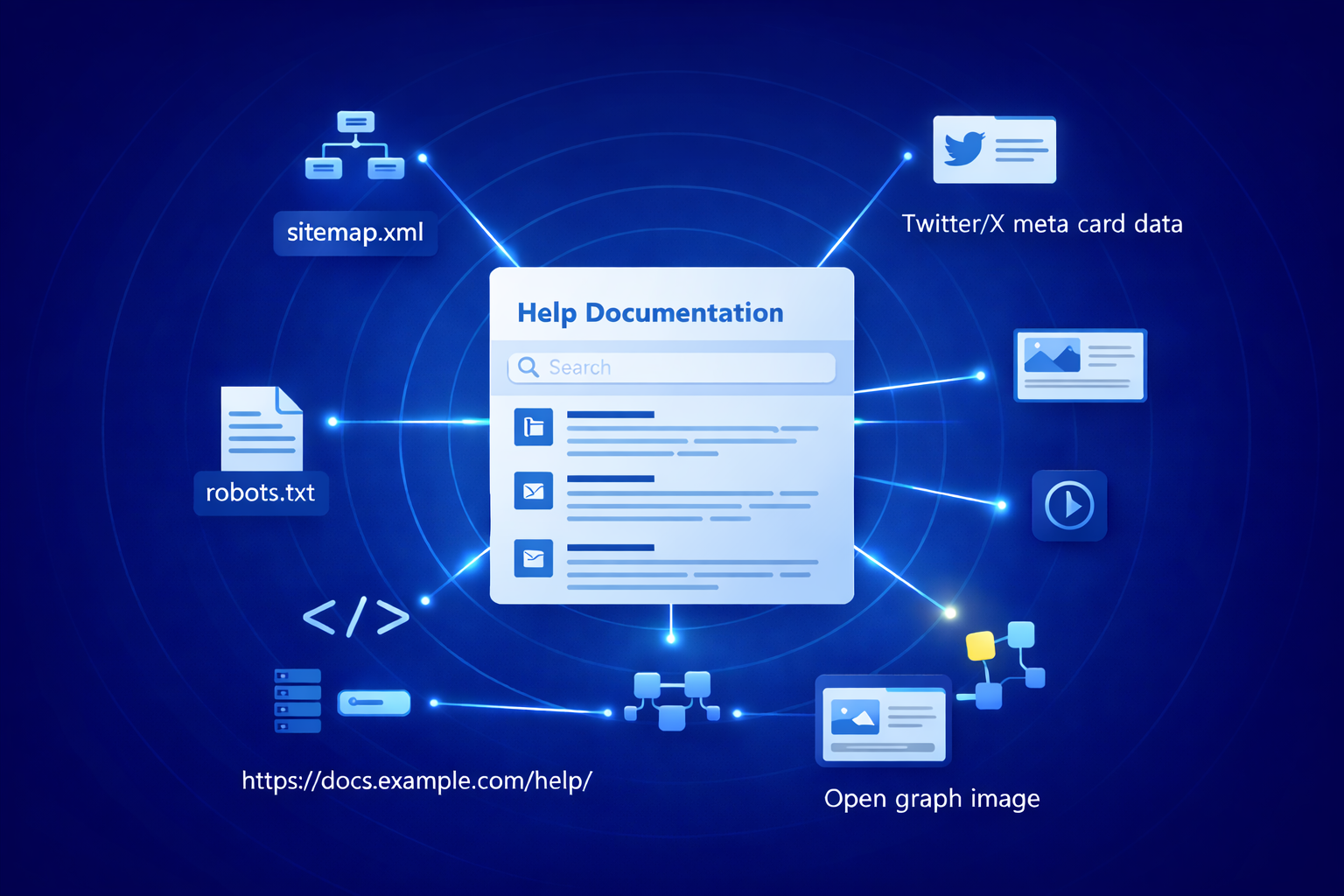
Publish Once, Be Found Everywhere: SEO Enhancements in ePublisher 2025.1
ePublisher 2025.1 enhances Reverb outputs with automatic sitemaps, robots.txt, canonical URLs, and structured metadata for improved discoverability across search engines and social platforms.

Erin West
Sales and Business Development Manager
Technical documentation teams put significant effort into structure, clarity, and organization.
With ePublisher 2025.1, that structure now extends beyond the help viewer itself. Reverb outputs include built-in SEO infrastructure that improves discoverability and visibility in search engines, making your content more findable and more engaging wherever users access it.
Search engines, social platforms, and AI-driven systems rely on structured signals such as sitemaps, canonical URLs, and metadata to crawl, index, and interpret content. In this release, Reverb generates them automatically.
Everything is generated automatically as part of the publish process.
Search-Engine-Ready Output
Reverb now generates a complete sitemap.xml with every publish.
A sitemap provides search engines with a structured inventory of your help content, making it easier for crawlers to discover all available pages, including those that may not be directly linked from navigation paths. This is especially important for large or multi-document help systems.
A robots.txt file is also generated automatically at the root of the output. It permits full indexing and explicitly references the sitemap location, ensuring search engine crawlers can efficiently discover and crawl the entire help site.
Together, these elements provide the foundational signals search engines expect when indexing modern web content.
Canonical URLs and Structured Metadata
Each Reverb page now includes a properly formed canonical link element:
<link rel="canonical">
The canonical URL is generated as an absolute path based on the configured base URL, establishing a single authoritative location for each page. This prevents duplicate indexing when help content is accessible from multiple domains, build outputs, or versioned paths.
Every page also includes machine-readable last-modified metadata. Search engines use this signal to prioritize recrawling updated content and to distinguish actively maintained documentation from stale pages.
These elements align Reverb output with established SEO best practices and provide consistent indexing signals across the entire help site.
Social Sharing That Works Automatically
Documentation is frequently shared across teams in Slack threads, LinkedIn posts, Twitter/X posts, support tickets, and email conversations.
Reverb now includes Open Graph and Twitter/X card meta tags so shared links render with:
- Clear titles
- Descriptions
- Proper page classification
- Optional preview images
Entry pages identify as websites, while content pages identify as articles, aligning with platform expectations.
When someone shares a help page, it renders with a structured, platform-ready preview without additional configuration.
Built for Modern Discovery- Including AI
Structured sitemaps, canonical URLs, and consistent metadata support traditional search engines, but they also improve machine-level discoverability.
AI-powered search systems and LLM-based retrieval tools rely on structured web signals, including sitemap references, canonical paths, and clearly defined page metadata, to locate, prioritize, and interpret content.
By generating these elements automatically, Reverb output provides clean, machine-readable signals that make help content easier to surface in AI-assisted search and retrieval environments.
Simple Configuration in ePublisher
All SEO features are managed through a new SEO settings group in ePublisher.
Four settings are available:
- Generate Sitemap (on/off) - Controls whether
sitemap.xmlfiles are produced - Sitemap Base URL - The public URL where the help site will be hosted (for example,
https://docs.example.com/help/) - Generate robots.txt (on/off) - Controls whether the
robots.txtfile is included - Open Graph Image - Optional path to a brand image used in social media previews
Once configured, everything else is handled automatically.
Extending the Reach of Your Documentation
ePublisher has always focused on helping teams publish high-quality documentation efficiently. With the SEO Suite in 2025.1, that efficiency now extends to discoverability.
Your help content is structured not only for users navigating within the site, but also for search engines, social platforms, and AI-driven systems that surface information across the web.
If you’re already using Reverb, take a few minutes to explore the new SEO settings in ePublisher 2025.1. With just a base URL and an optional image, your help output is structured for indexing and sharing.
If you haven’t upgraded yet, review what’s included in the ePublisher 2025.1 release or download the latest version to explore the new SEO settings in your own environment.